
Sauces, Chutneys & Condiments Contract Manufacturing in India: How to Build a Table Top Brand From Concept to Retail Shelf (2026)

The global sauces and condiments market is on track to cross USD 250 billion by 2030, and India has quietly become one of the most versatile origin points for hot sauce, chutney, mayonnaise, salad dressing and cooking sauce production. From boutique fermented chili pastes destined for Los Angeles hipster grocers to 250,000-unit rate contracts of tamarind chutney for UK supermarkets, Indian sauce contract manufacturers are running increasingly sophisticated hot-fill, cold-fill and aseptic bottling lines. This 2026 founder guide unpacks how to build a table-top condiment brand from concept to retail shelf without owning a single kettle.
Why Sauces Are the Highest-Margin Category in Food Manufacturing
Sauces and condiments consistently deliver gross margins of 55 to 72 percent at retail, higher than nearly any other packaged food category. The reason is structural: raw material cost as a share of retail price is typically 12 to 20 percent, packaging is 8 to 14 percent, and the rest is manufacturing overhead, brand equity and channel margin. A well-positioned hot sauce brand can hit gross margin north of 65 percent even at INR 220 retail. That economics is what draws founders back to condiments year after year despite the sensory complexity.
For a founder, choosing a sauces and condiments contract manufacturing partner in India in 2026 means access to hot-fill glass and PET lines, cold-fill mayonnaise emulsifiers, retort-pouch chutney formats, aseptic bag-in-box for foodservice channels and hand-crafted small-batch capacity for premium heritage recipes. The ecosystem is broader and more capable than most first-time founders realize.
The Sauce and Condiment Categories Indian Manufacturers Excel At
Hot sauces and chili pastes: fermented, vinegar-based, oil-based and heritage regional formats from bhut jolokia to Kashmiri red.
Chutneys and dips: coriander, mint, tamarind, mango, tomato, coconut and fusion global-Indian formats.
Ketchups, barbecue and steak sauces: tomato-based classics and premium craft variants.
Mayonnaise, aioli and sandwich spreads: eggless, egg-based, flavored and premium organic formats.
Salad dressings and marinades: emulsified, separated, oil-based and low-fat variants.
Curry pastes and cooking sauces: butter chicken, tikka masala, vindaloo, korma and regional signature bases.
Pickles, relishes and preserves: traditional Indian and global-cuisine formats in glass and pouch.
Global-cuisine sauces: teriyaki, sriracha, pesto, harissa, chimichurri and gochujang manufactured locally.
Category selection dictates line type. A founder building a fermented hot sauce brand should shortlist manufacturers with dedicated fermentation tanks and pH-monitoring controls. A founder building a mayonnaise brand should shortlist facilities with high-shear emulsifiers and cold-fill capacity. Mismatching category and facility is the single most common reason first-batch sauce launches fail sensory validation.
How Sauce Manufacturing Works: Hot Fill, Cold Fill and Aseptic

Three fundamental process technologies define the sauce manufacturing world. Understanding which one your product needs is the difference between a shelf-stable hit and a supermarket recall.
Hot Fill Processing
Hot-fill uses the heat of the product itself (typically 85 to 92 degrees Celsius) to sterilize the bottle and cap at the point of filling. This suits high-acid or acidified products — ketchup, hot sauce, chutney, tomato-based sauces and vinegar-forward salsas. Shelf life at ambient is typically 12 to 24 months. Hot-fill glass and heat-set PET are the dominant formats. The advantage is no preservatives are needed for shelf stability; the constraint is that the product must have a pH under 4.6 and enough thermal robustness to survive the fill temperature.
Cold Fill Processing
Cold-fill is used for emulsions and low-acid or delicate products — mayonnaise, salad dressings, cream-based dips and yogurt-based sauces. The product is manufactured, emulsified and filled at chilled temperatures under HEPA-filtered air. Shelf life relies on refrigeration or pasteurization plus preservatives such as potassium sorbate. Cold-fill maintains sensory delicacy and vibrant colors but requires cold-chain distribution — a real cost adder for brands targeting mass retail.
Aseptic and Retort Processing
Aseptic processing sterilizes product and packaging separately, then combines them in a sterile environment — ideal for bag-in-box foodservice sauces, Tetra Pak curry bases and long-life cooking sauces sold to HoReCa. Retort processing sterilizes filled and sealed pouches or cans at 121 Celsius under pressure — used for chutney pouches, curry paste jars and shelf-stable cooking sauces. Both extend shelf life to 18 to 36 months and eliminate the need for refrigeration in distribution.
MOQ, Pricing and Lead Times for Sauce Contract Manufacturing in India
Sauce MOQs vary dramatically by line type, packaging and product complexity. The following benchmarks reflect 2026 market rates from verified Indian contract manufacturers.
Hot sauces (150 to 250 ml glass): MOQ 5,000 to 10,000 bottles, per-bottle cost INR 22 to 55.
Chutneys (100 to 200 g pouch or jar): MOQ 8,000 to 15,000 units, per-unit cost INR 12 to 32.
Mayonnaise (200 to 500 g jar or squeeze): MOQ 10,000 to 20,000 units, per-unit cost INR 28 to 78.
Salad dressings (250 to 350 ml): MOQ 8,000 to 15,000 bottles, per-bottle cost INR 32 to 68.
Curry pastes and cooking sauces (250 to 500 g): MOQ 5,000 to 12,000 jars, per-jar cost INR 42 to 110.
Foodservice bag-in-box (2 to 5 kg): MOQ 500 to 2,000 units, per-unit cost INR 220 to 620.
Founders should budget for packaging separately since glass, PET, retort pouch, cap and shrink-sleeve suppliers each have their own MOQ and lead time. Total time from PO to first commercial batch is typically 10 to 16 weeks — packaging print and glass bottle procurement dominate the critical path.
Packaging Considerations That Actually Move Retail Sales
In the sauces aisle, packaging is not decoration — it is the primary conversion mechanism. Blind sensory research consistently shows that consumers reach for the bottle they perceive as more premium before they read the ingredient list. Glass with a printed shrink sleeve outperforms label-only glass by 22 to 34 percent in shelf pull. Squeezable inverted PET outperforms upright glass in the mayonnaise and ketchup category by 40 percent among users under 35.
Cap choice matters more than founders realize. Flip-top caps for hot sauce, twist-off metal caps for chutney and pump dispensers for salad dressings each have their own consumer expectation baked in. Deviating without a compelling reason confuses shoppers and reduces trial. Similarly, the neck of the bottle, pour rate and residue on the outside of the bottle after use all shape whether a household repurchases at week two.
Regulatory Compliance for Sauce and Condiment Brands
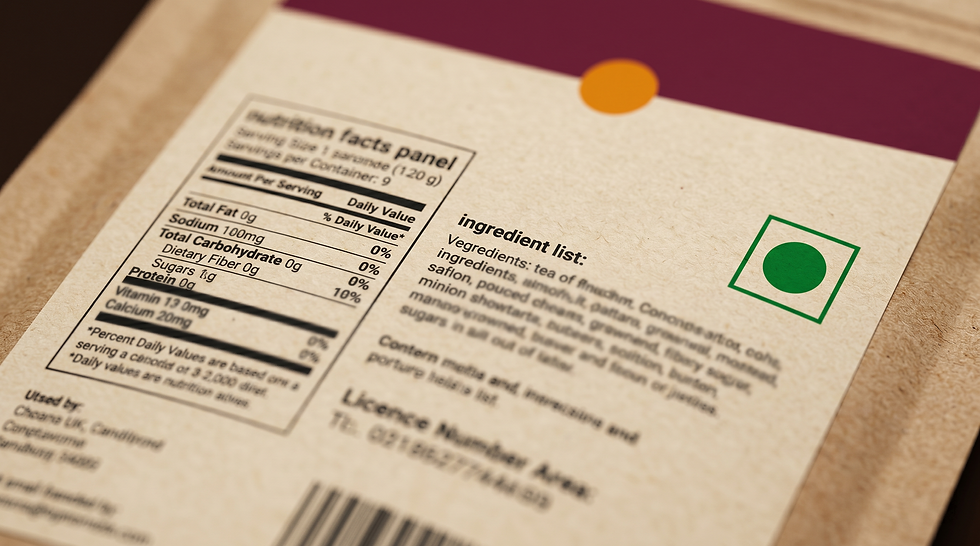
India FSSAI regulations for sauces and condiments live under Standards 2.3 and 2.7, covering pickle, chutney, sauce, ketchup and dressing categories. Each has minimum ingredient percentages (for example, tomato ketchup must have at least 25 percent tomato solids), permitted preservatives, allowable colors and pH thresholds. Labels must show FSSAI license number, list of ingredients in descending order, best-before date, batch code, MRP and net weight in both metric and any imperial formats sold.
Export brands add layers. The US FDA requires acidified food registration for hot sauces with added acid; the EU demands compliance with Regulation 1333/2008 on additives; the UK requires precautionary allergen labeling in bold. Halal certification opens Southeast Asia and Middle East channels; kosher certification unlocks premium US grocers. A capable Indian contract manufacturer will already carry these certifications and simply add the founder brand under their master facility approval.
The Founder Playbook: From Recipe to Retail Shelf in 6 Months

A well-structured sauce brand can go from concept to retail listing in 26 weeks. Weeks 1 to 4 are for positioning: category, flavor profile, price point and target retailer. Weeks 5 to 8 are shortlisting three contract manufacturers, signing NDAs and sending flavor briefs. Weeks 9 to 14 cover recipe development, pilot batches (200 to 500 units), sensory panels and shelf-life initiation. Weeks 15 to 18 finalize packaging design, secure FSSAI product endorsements and negotiate retailer listing agreements. Weeks 19 to 22 are first commercial batch, dispatch and warehousing. Weeks 23 to 26 cover retail activation, D2C launch and paid marketing scaling.
The sauce brands that scale are not the ones with the boldest flavors — they are the ones whose contract manufacturer can hit the same flavor, color and viscosity on batch one and batch fifty.
Common Mistakes That Kill Sauce Brands in Year One
Choosing a manufacturer without pH and viscosity validation on the target recipe.
Under-budgeting for glass bottle procurement lead time — often 8 to 12 weeks alone.
Skipping accelerated shelf-life studies and discovering separation or oxidation at month four.
Launching in five cities before proving repeat rate in one metro corridor.
Ignoring cap-and-closure compatibility with hot-fill temperatures — causing seal failures.
Assuming the same recipe works across every format (glass, PET, pouch) without reformulation.
Why Harvestia Is Built for Sauce and Condiment Contract Manufacturing
Harvestia Group brings integrated capability across recipe development, hot-fill and cold-fill sauce manufacturing, retort chutney production, packaging design and export logistics under a single accountable partner. Our clients include founders launching their first hot sauce brand in the domestic market and international grocery retailers running annual rate contracts for private-label chutneys and cooking sauces. The infrastructure — FSSAI Central certification, ISO 22000, BRCGS, dedicated glass and PET lines and export documentation — is already in place, so a founder does not have to piece together vendors and consultants across three states.
The sauces category rewards operational excellence and punishes shortcuts. A brand that lands with the right partner in India can enter global retail at a cost base 30 to 50 percent below Western co-packers, with certifications valid in 30-plus countries and the flexibility to iterate on flavor every quarter. The founders who understand this are already scaling. The ones who chase the cheapest quote are still stuck in recall discussions. Choose the partner that has been through it fifty times before — because sauce brands are not built on the first batch, they are built on the fiftieth.


Comments