
Bulk Cumin Seeds from India: Grades, Specs and a Buyer's Checklist (2026)
Short answer: when you buy bulk cumin seeds from India, the grade name on the quote is only a starting point. What protects you is a written specification that states purity, cleaning method, moisture, colour and aroma against an approved sample, plus a lab report with every commercial lot and a clear pack and shipment plan.
This guide is for importers, spice packers, private label brands, distributors and foodservice buyers who purchase whole cumin seed by the pallet or container. It explains how grades are described, what to put in a specification, how to check purity and documents, and how samples, packing and FOB Mundra shipment fit together.
Who this is for: buyers who need whole or ground cumin seed from India that looks, smells and tests the same on lot after lot, and who want a clear brief before they ask for a quote.
In this guide
What bulk cumin seed really is
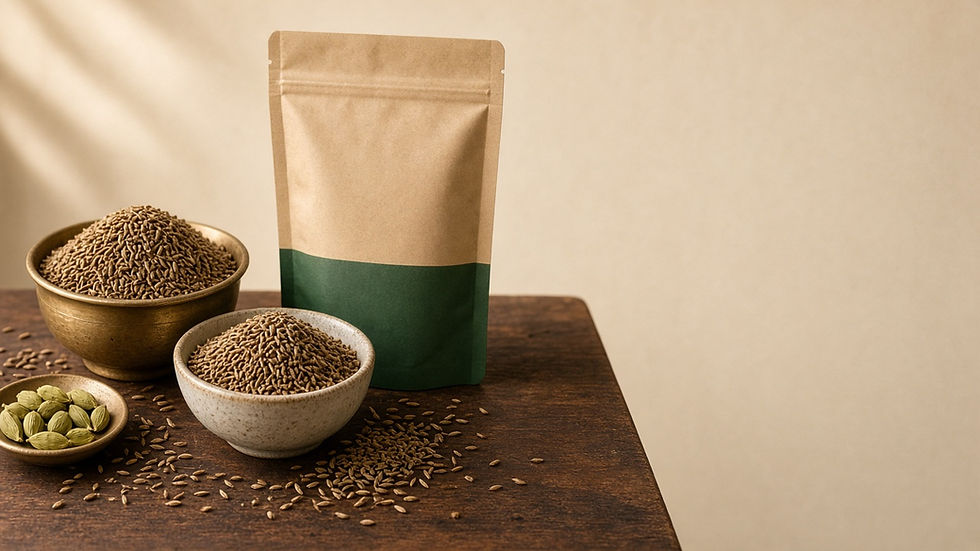
Cumin seed is the dried fruit of the plant Cuminum cyminum. It is small, ridged and brown, and it is one of the most widely traded spices. Its warm, earthy aroma comes mainly from a compound called cuminaldehyde, which is why aroma and volatile oil matter as much as appearance when you judge a lot.
Buyers usually purchase cumin in one of three forms: raw seed as it leaves the farm gate market, cleaned whole seed ready for packing, or ground cumin milled to a mesh you specify. Each form has a different risk profile. Raw seed carries the most dust, stems and stones. Cleaned seed is cleaner but still varies in colour and size. Ground cumin hides what the seed looked like, so you must trust the process and the lab report even more.
If you are building a wider sourcing file, read our spice exporter India definitive sourcing guide first. This post goes deep on one product: cumin.
Key point: two quotes for "cumin seed" can describe very different products. Always compare the written specification, not the product name.
Origin, crop timing and why lots differ
India is one of the main producing and consuming countries for cumin, and the crop is grown mainly in the western states, with Gujarat and Rajasthan the best known. Cumin is a cool season crop that is typically harvested in the first months of the year, so most of the year's supply comes from one harvest window and is then stored and traded through the following months.
That has three practical effects for a buyer.
Lots vary by season. Weather during flowering and seed fill changes size, colour and oil content, so a lot bought in one season will not be identical to the next.
Storage matters. Seed held for months in poor conditions can lose aroma, pick up moisture or attract insects.
Price and availability move. Cumin prices can swing with the crop size and demand, so lock volumes and price terms in writing and avoid assuming last year's terms.
Ask your supplier which harvest a lot comes from and how it has been stored. A straight answer is a good sign. A vague answer is a reason to ask for a sample from the actual lot.
Cumin grades and how buyers describe them
There is no single legal grade scale that every buyer and seller uses for cumin. In trade, quality is described with shorthand terms and with a numeric purity figure that is agreed per contract. The names below are common market shorthand, not legal categories, so always put the actual figures in your specification.

Term in the quote | What it usually signals | What to write down |
|---|---|---|
Machine cleaned | Seed passed through cleaning machines to remove dust, stems and light material | Maximum foreign matter, cleaning steps used |
Colour sorted | Seed passed through an optical sorter to remove dark, discoloured or foreign pieces | Colour consistency target, reference sample |
Europe quality, Singapore quality | Market names for tighter purity bands used by some importers | The exact purity figure and tolerance, never the name alone |
Regular or standard | Looser cleaning, often for further processing | Where it can be used and what must be removed later |
Steam treated | Seed treated to reduce the microbial load | Method, record of treatment, post treatment lab results |
Two points make grades easier to manage. First, ask for a sample drawn from the actual lot, not a hand picked sample from the best bag. Second, write the purity figure as a minimum percentage of whole cumin seed by weight, with the test method named, so both sides measure the same thing.
Key point: a grade name is a conversation starter. A signed specification with numbers and test methods is the contract.
The specification for whole cumin seed
A specification turns "good cumin" into something that can be checked. Keep it to one page and agree it before the first commercial order. If you need a layout to start from, our spice blend specification sheet template shows how to structure parameters, methods and tolerances, and the same logic applies to single spices.
Parameter | What it controls | How to write it |
|---|---|---|
Purity | Share of whole cumin seed by weight | Minimum percentage with the test method named |
Foreign matter | Stems, stones, dust, other seeds | Maximum percentage, split by type if needed |
Moisture | Shelf life, mould and insect risk | Maximum percentage with method |
Colour and size | Visual consistency on the shelf | Reference sample plus a written description |
Volatile oil | Aroma strength | Minimum value with method, if your use needs it |
Insect damage and live insects | Storage condition and food safety | Maximum damaged seed, zero live insects |
Microbiology | Food safety for your use | Panel and limits matched to your market |
Contaminants | Pesticide residues, metals, mycotoxins as relevant | Scope and limits for your destination |
Where the table says "percentage" or "value", your own buying standard or your destination rules set the number. We do not suggest universal figures here, because the right limit depends on your product, your customers and your market.
One line that belongs in every brief
Product name, form (whole or ground), purity and cleaning method, colour target against a reference sample, moisture limit, volatile oil if needed, pack format, destination, first order quantity and annual estimate.
Whole versus ground cumin
Whole cumin seed keeps its aroma longer and lets you inspect what you are buying. Ground cumin is convenient and dose friendly, but it is easier to blend with filler and harder to judge by eye.

Factor | Whole seed | Ground cumin |
|---|---|---|
Aroma life | Longer if stored well | Shorter, grind exposes more surface |
Inspection | You can see seed size, colour and foreign matter | You rely on the process and the lab report |
Use | Tempering, roasting, further grinding at your own site | Ready to use in retail packs and kitchens |
Key spec | Purity, colour, size, foreign matter | Mesh band, colour, moisture, volatile oil |
Main risk | Dust, stones, stems, mixed seed | Dilution, heat damage while grinding, clumping |
If you buy ground cumin, agree the mesh range, the grinding method and a cooling step so the heat from milling does not drive off aroma. Ask for a retained sample from each lot so you can compare later if a complaint comes in.
Cleaning, sorting and steam treatment
Good cumin is made as much by cleaning as by farming. Typical steps include sieving, air separation to lift away light material, gravity separation to take out stones and heavier foreign matter, and colour sorting to remove dark or off colour seed. Some buyers also require steam treatment to reduce microbial load.
Ask your supplier to describe the steps in order, not just the result. Then ask what happens after cleaning: how seed is stored, how it is protected from pests, and how it is packed. Cleaning that is followed by loose, open storage can undo the work.
A few questions get a quick read on a supplier.
What cleaning steps does this grade go through, and in what order?
Is colour sorting included or an extra step?
If steam treated, how is the treatment recorded and what lab results follow it?
How is cleaned seed stored before packing?
Key point: if you will not treat the seed again after it reaches you, ask for lab results that match the treatment you expect, not just a statement that it was treated.
Purity, foreign matter and adulteration checks
Cumin is a spice where buyers often report mixed or doctored lots, so make checks a routine rather than a reaction. Typical concerns include extra seeds that look similar, dust or soil, stems and stones, and seed that has been coloured to look fresher or darker than it is.
You can run simple checks on every arrival before you open the lab report.
Look at the whole sample on a white tray. Spread seed thin and look for stems, stones, odd shaped seeds and colour outliers.
Rub a small amount on a white cloth or paper. Any colour transfer is a reason to ask questions and test.
Smell a sample and crush a few seeds. Fresh cumin should smell warm and clean. A weak, flat or musty smell points to age, poor storage or dilution.
Compare with your reference sample. Keep a sealed reference from the approved lot and compare size, colour and aroma side by side.
Check for live insects and webbing. Pull a handful from several bags, not only the top.
Visual checks do not replace laboratory tests. They tell you when to send a sample to a lab and what to ask the lab to look for.
Lab reports, COA and destination checks
A certificate of analysis is evidence for one lot. Read it against your specification, and check that the lot number on the report matches the lot number on the invoice and the pack codes.
What a cumin report should cover
Product name, form and lot number that match the shipment.
Moisture, foreign matter and any other physical parameters you agreed.
Volatile oil with a named method, if it is in your specification.
Microbiology suited to your use, especially if the seed will be eaten without further cooking.
Contaminant scope for your destination, such as pesticide residues, heavy metals and mycotoxins as agreed.
Methods and limits shown clearly, not only the word "complies".
Destination checks to raise early
Rules for residues, contaminants and treatment differ by market. For the European Union, buyers usually look at the pesticide residue rules under Regulation (EC) No 396/2005 and the contaminant rules under Regulation (EU) 2023/915, and some buyers also set their own limits above the legal minimum. For the United States, importers need to think about FDA food safety rules for importers. Treat these as pointers for your own adviser, not as a checklist you can rely on alone.
For the wider view of what importers screen on before they approve an exporter, see what global buyers actually check before sourcing from India.
Key point: agree the lab report scope before the first commercial shipment. A report format settled after the cargo sails is how holds and disputes begin.
Packing, lot size and FOB Mundra
Cumin keeps best when it is dry, clean and protected from air, light and pests. Choose the pack to match how you will use the seed.

Use | Typical pack formats | What to specify |
|---|---|---|
Industrial or repacking | Bags or cartons with a liner | Moisture barrier, net weight, lot code, pallet plan |
Foodservice | Larger catering packs or tubs | Reseal, dose clarity, kitchen handling |
Retail private label | Stand up pouches, jars, tins | Barrier level, shelf life target, label accuracy |
Also settle these points in writing before the order.
Net weight per pack and per carton, and how pallets are built.
Lot coding and best before format that your customers expect.
Who owns artwork and print plates, so you can reprint without a redesign.
The shipment term. Our standard is FOB Mundra, with documents coordinated with your forwarder.
We process and supply, and we pack under the buyer's brand in the format you approve.
Samples and a safe first order
Approve on evidence, then buy in steps.
Request samples drawn from a real lot, with the lot number noted on the sample.
Check against your specification. Look, smell, test and record the result.
Send to your own lab if your market needs it, and compare with the supplier report.
Seal and retain a golden sample on both sides so later lots can be compared fairly.
Run a pilot. At Harvestia, pilot runs start from 50 kg, which lets you confirm cleaning, colour and paperwork before a larger order.
Scale up once the pilot lot matches the golden sample and the lab report lines up with your specification.
If you are blending cumin into a masala or seasoning, the same logic applies at blend level. Our custom masala manufacturer guide covers how to run samples, golden samples and pilots for blends.
Buyer checklist
Use this before you place a first commercial order for bulk cumin seed.
Form confirmed: whole seed or ground, with a mesh band if ground.
Purity figure and test method written into the specification.
Cleaning steps described in order, with colour sorting included or excluded.
Moisture limit and volatile oil target agreed where they matter for your use.
Reference sample sealed and retained by both sides.
Harvest and storage history asked for and answered.
Arrival checks planned: white tray look, rub test, smell, insect check.
Lab report scope agreed for every commercial lot, with methods and limits.
Destination residue, contaminant and labelling rules confirmed with your adviser.
Pack format, net weight, lot code and best before format confirmed.
Pilot completed where you need scale confirmation.
Shipment term confirmed as FOB Mundra unless you agree otherwise.
One named contact on each side for decisions.
How Harvestia works with cumin buyers
Harvestia Group works with importers, packers, private label brands, distributors and foodservice buyers who need cumin that stays consistent. Our order of work follows the steps that protect quality.
Source: spices come through a clear supply chain from ground level farming families, with about 8,000 farming members across India helping maintain quality.
Quality control: incoming checks on the seed, comparison against your approved sample, and lab reports with commercial lots, against the parameters in your specification.
Pack under your brand: we process and supply, and we pack under the buyer's brand in retail, catering or bulk formats you approve.
FOB Mundra: export lots are prepared for shipment FOB Mundra, with documents coordinated with your forwarder.
You can start small. Samples are available from Rs 250 and pilot runs start from 50 kg, so you can lock quality and paperwork before bigger volumes.
Prefer email? Write to sales@harvestiagroup.com with your cumin brief, destination market, pack format and estimated volumes.
FAQs
What should I check first when buying bulk cumin seeds from India?
Check the written specification first: purity, cleaning method, moisture, colour against a reference sample and the lab report scope. Then confirm that a sample from the actual lot matches it before you place a larger order.
Is there an official grade scale for cumin?
No single scale is used by every buyer and seller. Trade names such as Europe quality or Singapore quality are market shorthand, so always write the actual purity figure and test method into the contract.
How should I write purity into a cumin specification?
State a minimum percentage of whole cumin seed by weight and name the test method. Add a maximum for foreign matter, and say how it is measured, so both sides get the same result.
Should I buy whole or ground cumin?
Buy whole if you want to inspect the seed and grind in house, because whole seed keeps aroma longer. Buy ground if you need ready to use convenience, and agree the mesh band and grinding method in writing.
What is the difference between machine cleaned and colour sorted cumin?
Machine cleaning removes dust, stems, stones and light material. Colour sorting adds an optical step that removes dark, discoloured or foreign pieces. Ask which steps a quote includes, because they change both price and consistency.
Do I need steam treated cumin?
It depends on your product and your market. If the seed will be eaten without a further kill step, ask for treatment and matching microbiology results. Confirm the rule for your destination with your adviser.
How can I spot a doctored or diluted lot?
Spread seed on a white tray, rub a sample on a white cloth, smell and crush a few seeds, and compare with your reference sample. Any colour transfer, odd shaped seeds or a flat smell is a reason to test and to ask the supplier questions.
What lab report should come with a cumin shipment?
A lot specific certificate of analysis with a lot number that matches the invoice and pack codes, the parameters you agreed, named methods and clear limits. Agree the scope before the first shipment.
What is the minimum order for a cumin pilot?
At Harvestia, pilot runs start from 50 kg. Samples are available from Rs 250, so you can check quality and documents before a larger order.
Can cumin be packed under my own brand?
Yes. We process and supply, and we pack under the buyer's brand in retail, catering or bulk formats you approve, with lot coding agreed in advance.
What shipment term do you use?
Our standard is FOB Mundra, with documents coordinated with your forwarder. Other terms can be discussed in your quote.
Ready to brief a cumin order?
Send your specification, destination and estimated volumes, and we will come back with a clear next step: samples, a pilot, or a quote you can compare line by line.
Disclaimer: this article is commercial guidance only. It is not legal, customs or regulatory advice. Always confirm current requirements for your products and markets with the relevant authorities and your own advisers.
Harvestia Group, Ahmedabad, Gujarat, India | sales@harvestiagroup.com | www.harvestiagroup.com


Comments